Vehicle production in the UK falls to 73-year low – BBC
British car, van, truck and bus production fell to its lowest level since 1952 last year, according to the Society of Motor Manufacturers and Traders (SMMT).
Its chief executive Mike Hawes said it had been "the toughest year in a generation", with output hit by a major cyberattack at Jaguar Land Rover, the closure of Vauxhall's plant in Luton and deep uncertainty over US trade policy.
The situation is expected to improve this year, with the introduction of new electric models. The SMMT believes production of cars and vans could exceed 1 million by 2027.
But Hawes warned that "increasingly protectionist" proposals emerging from Brussels represented a "significant threat" to the UK industry.
Overall, 764,715 vehicles were built in 2025, which was 15.5% fewer than in 2024. The vast majority of these were cars, with 717,371 leaving the production line. That was some 60,000 fewer than last year.
By comparison, as recently as 2016, the UK produced 1.7 million cars.
But since then, analysts say uncertainty over Brexit arrangements, the 2021 closure of Honda's factory in Swindon, the impact of the Covid pandemic and serious supply chain disruption have taken a heavy toll on the local industry.
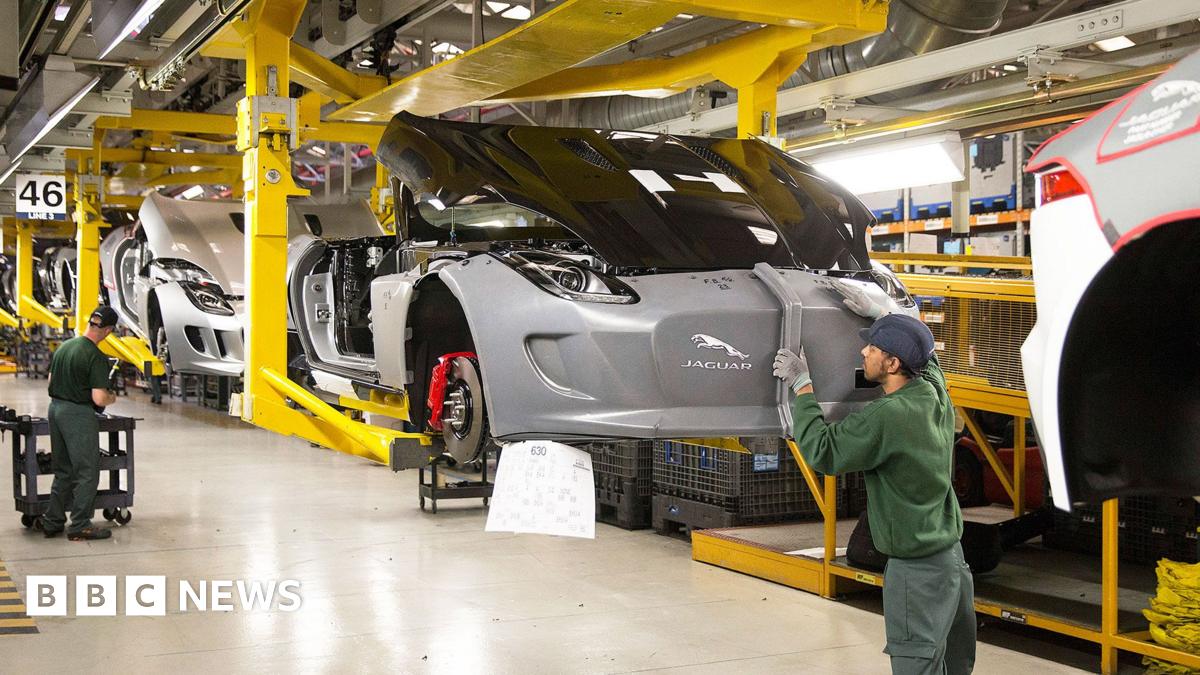
Last year, vehicle manufacturing was badly affected by a number of one-off or temporary issues. They included the cyberattack on Jaguar Land Rover, which forced the company to shut down its computer networks and brought its factories to a halt at the beginning of September.
Facilities which would normally build thousands of cars each week remained idle for more than a month, and production did not get back to normal for some time after that.
Electric car discounts are unsustainable, says industry group
How Slovakia became the world's number one carmaker
With roughly 78% of the cars built in the UK destined for export, the industry is also vulnerable to trade disruption. US President Donald Trump's sudden announcement in April of import taxes, or tariffs, on cars sent to America prompted some manufacturers to limit shipments there.
Ultimately, a deal was done which removed the threat of very high levies. But the basic tariff on UK cars exported to the US still increased from 2.5% to 10%, and had a dampening effect on sales.
A further factor that limited car production last year was the earlier decision by Nissan and JLR to end production of ageing models while preparing their factories to produce a new generation of electric vehicles.
The latest version of Nissan's electric Leaf began rolling out of its factory in Sunderland in mid-December, while JLR's new electric Range Rover and the first of a new generation of electric Jaguars are due to emerge from its Solihull plant later this year.
Output of commercial vehicles, meanwhile, fell 62% last year to just 47,344. The bulk of the decline was caused by the closure of Vauxhall's plant in Luton, which shut its doors for good in late March. Parent company Stellantis is consolidating its UK van production at its Ellesmere Port factory in Cheshire.
The SMMT believes this year will be better, with car output expected to rise by 10% as production of new models ramps up. According to Hawes, there is a "pathway" to increasing output of cars and vans to more than 1 million per year by 2027.
This "optimisitic but realistic" target would rely on the introduction of more new models, he said, as well as a recovery in demand in key export markets, especially in Europe.
It would also require the government to implement key parts of its Modern Industrial Strategy, notably measures to drive down what the SMMT describes as the UK's stubbornly high cost of energy.
The government's own target is more ambitious. It wants the UK to produce 1.3 million vehicles a year by 2035. For that to happen, according to Hawes, a new manufacturer would need to set up a factory in the UK – with a Chinese firm the most likely target.
"In terms of who is expanding their production globally, obviously it's the Chinese," he said.
However, the UK industry is also facing threats which could significantly harm future production.
Hawes expressed deep concern about what he called a shift towards a 'Made in Europe' approach from the EU authorities. This included plans to restrict government subsidies for low emission vehicles to those built in Europe, as well as measures forcing corporate fleets to favour European-made cars.
"Unless the UK can be seen as part of that, these proposals could have the effect of delivering what Brexit didn't deliver – and that's making it much harder for UK produced vehicles to access the European market," he said. "So this is a significant threat."
He also pointed to tougher European Union 'rules of origin, external' measures which are due to come into force in January next year. These will significantly increase the amount of parts and components produced in the EU or the UK that needs to be included in electric vehicles exported in either direction, if they are to be exempted from steep tariffs imposed at the border.
However, many EVs being transported across the channel still do not meet these requirements. This is largely because battery-building capacity in the UK and Europe has not grown as quickly as was expected when the rules were drawn up. Hawes said he was hoping an agreement could be reached during the year, in order to give manufacturers more time to comply.
The UK car industry is at a tipping point – can it be saved?
'Carspreading' is on the rise – and not everyone is happy about it
Get our flagship newsletter with all the headlines you need to start the day. Sign up here.
Comments can not be loaded
To load Comments you need to enable JavaScript in your browser
UK citizens to be able to travel to China visa-free, Starmer announces in Beijing
Ministers reject Waspi calls for compensation after rethink
Teen admits murdering schoolboy, 12, on walk home
What could happen if the US strikes Iran? Here are seven scenarios
Water bills to rise again: Use our tool to find out by how much
Yes, you can be friends with an ex – but there are rules
Watch: How Alex Pretti shooting led Trump to shift course in Minneapolis
'Why can't women have experience?' New Bridgerton series tackles sex taboo
The by-laws you may not know exist in London
'You don't feel judged': Why we buy more at self-service terminals
Why have English teams dominated as Real & PSG face play-offs?
Politics Essential: Get the latest news and analysis delivered to your inbox every weekday
A Welsh town finds itself in the middle of a drug smuggling ring
How can you build resilience?
Inside the lives of four bickering vampires
Graham Norton discusses being invited to Taylor Swift's wedding
Ministers reject Waspi calls for compensation after rethink
Teen admits murdering schoolboy, 12, on walk home
Hampstead ponds trans access challenge dismissed
Girl, 12, strangled and raped, court hears
Number of term-time school holiday fines hits another record high
Stay on this stunning island for free… if you're willing to count puffins
Boss of Post Office IT scandal firm Fujitsu to step down
What could happen if the US strikes Iran? Here are seven scenarios
Shoplifter killed Asda security guard during struggle
Bus driver sacked after chasing and punching thief
Copyright © 2026 BBC. The BBC is not responsible for the content of external sites. Read about our approach to external linking.