Why Used Cars Are Outpacing New Cars In India In 2025 – CarDekho
Ad
Ad
Ad
Published On Oct 13, 2025 07:51 PM By CarDekho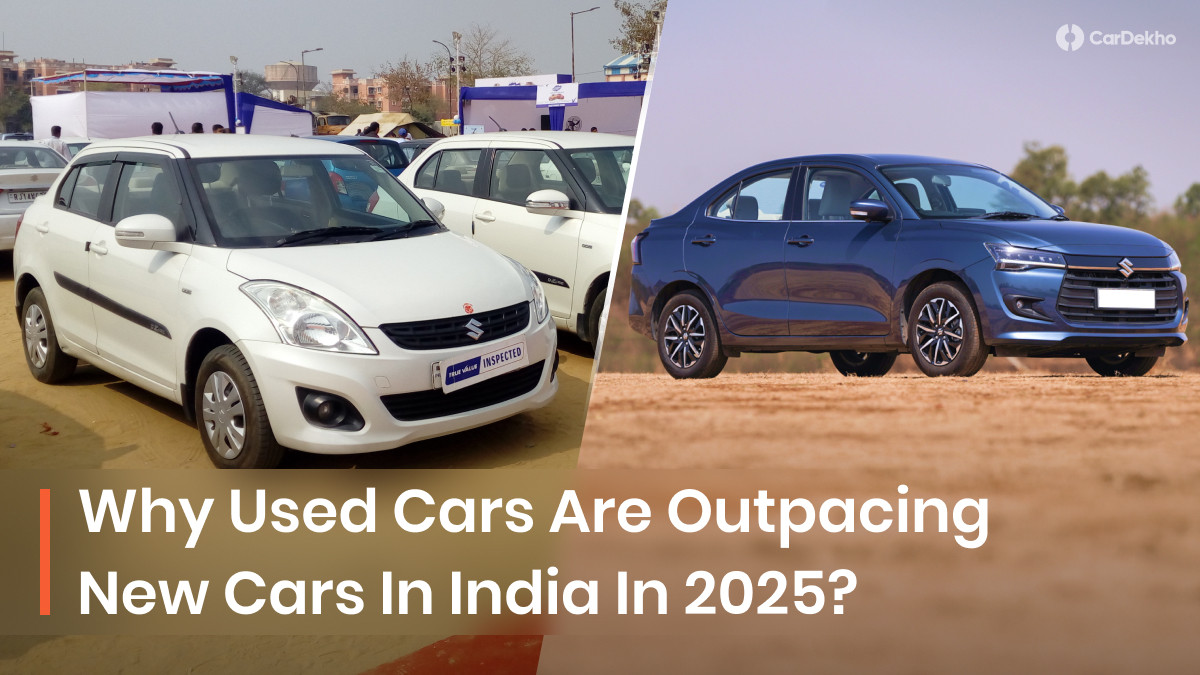
While the new car market received a significant boost from the GST reduction, the used car market continues to maintain strong growth
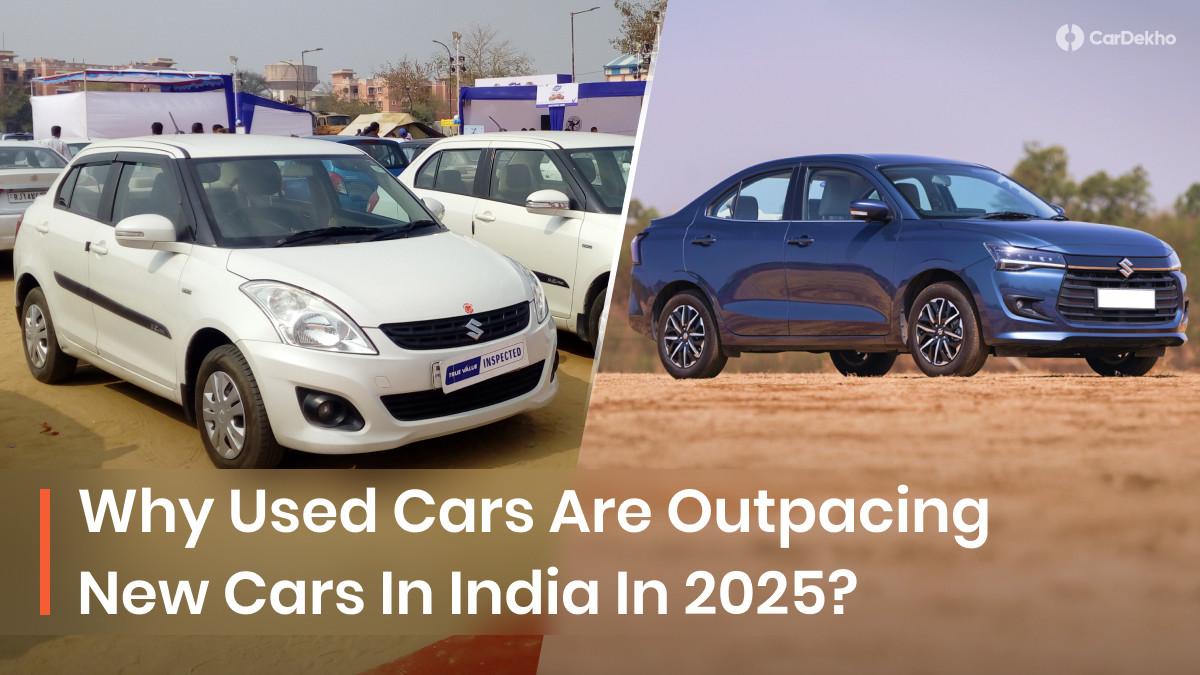
Unlike in the past, a first-time buyer in India today doesn’t necessarily consider buying a brand-new car as his or her first option. They are now open to exploring a used car, where an attractive price may help them own a dream car from a higher segment for the same price as a new one. This has brought a fundamental change in buyer behaviour, boosting the sales of used cars.
A recent note published by rating agency CRISIL early this year anticipates 8-10 per cent growth in FY26 for used cars, which is more than twice as fast as new car sales. The market value of these used cars is estimated to be around Rs 4 lakh crore, nearly matching that of new car sales.
Parameter
Details
Used Car Market Growth FY26
8-10% growth anticipated
Growth Comparison
More than twice as fast as new car sales
Used Car Sales Volume FY26
Expected to cross 6 million units
Market Value
Estimated around Rs 4 lakh crore (₹4 trillion)
Used-to-New Car Sales Ratio
Increased to 1.4 from below 1 five years ago
Drivers
Rising digital adoption, better financing access, value-conscious consumers
Average Age of Used Cars Sold
Expected to drop to 3.7 years
Challenges
High refurbishment, logistics, financing costs
In other words, India’s used car sales are booming, and if you’re in the market looking for your favourite used car this festive season, there isn’t a better time to get a great one.
The research firm states that the sales volume of used cars in India is likely to cross 6 million units this fiscal, with a market value estimated at around Rs 4 lakh crore, nearly matching that of new car sales. This rapid shift is fueled by growing openness among buyers, a focus on value, ease of purchase, uptick in digital adoption, easier financing options and, importantly, many organised players offering reliable cars.
The gap between used and new car sales has widened sharply. For every new car sold, about 1.4 used cars are now sold, up from less than one five years ago. This shows that more people now prefer buying used cars. After a much lower growth rate of nearly 5% during the five years period between 2017 and 2024, used car sales rose 8% last year and are expected to grow even faster in 2025.
Anuj Sethi, Senior Director at CRISIL Ratings, notes that this improvement reflects rising consumer confidence and digital adoption. The supply side remains robust, with the average age of used cars steadily dropping and expected to reach around 3.7 years, reflecting quicker upgrade cycles and a growing preference for utility vehicles that mirrors new car trends.
What has really happened over the last few years is the entry of many organised players such as Spinny, Cars24, CarDekho, Mahindra First Choice, CarTrade, OLX Autos into the market. Today, new players have changed the way used cars are being retailed. These companies have collectively raised significant sums of money to invest in inspection hubs, technology infrastructure, and customer experience. They also promise customers better warranty, reasonable prices, and transparent processes, besides making the buying process hassle-free.
The traditional issues in used car buying, like mistrust, lack of authentic information, and arbitrary prices, have been largely addressed by implementing better practices with the help of technology
Like every industry, digital tools have become key enablers in accelerating the growth of the used car market. New-age used car platforms now provide 360-degree services, including inspection, refurbishment, financing, insurance, and doorstep delivery. Additionally, furthermore, special apps designed to make the buying and selling not just easier but highly efficient with listing of cars with all the verified details. Then comes the transformation technology- Artificial Intelligence.
Online used-car companies also have a mix of manufacturer-backed outlets and inventory-led online platforms, which corner half of the organised market and account for a third of total used-car sales volume.
Buyers are spoiled for choices with an extensive range of used car models across brands, segments and price points, and a robust new car market. This helps in expanding the inventory, coupled with easier vehicle financing and lower interest rates, with a simplified buying process expected to carry the momentum toward pre-owned cars in India.
It is not just new car sales, but the reduction in GST rates is expected to accelerate used car sales too. The reason is that new ICE-powered cars are a whole lot cheaper after the tax cut, impacting prices of used ones.
This also means the affordability of new cars goes up, resulting in used car valuations taking a hit, especially for models that are just two to three years old.
This is likely to lift sales of older models by up to 20 percent, with a rise in trade-in volumes. And so more cars enter into the used segment due to car buyers exchanging old models for newer, more affordable ones. Hence, overall, the GST cut augurs well for the used car market, benefiting buyers.
Despite remarkable overall growth, India still ranks way behind developed markets globally in the used-to-new car sales ratio, thus pointing to future growth. The used car segment has proven remarkably resilient, even during challenges like the pandemic and semiconductor shortage that disrupted new car production; it maintains steady growth.
While organised players continue to face profitability challenges, the market demand remains elevated. According to Poonam Upadhyay, Director at CRISIL Ratings, most players are likely to achieve operating breakeven over the next 12-18 months if the current momentum on cost agility sustains.
Ad
5 out of 5 found this helpful
Largest Auto portal
Every 4 minute
Stay updated pay less
Decode the right car
© 2026 Girnar Software Pvt. Ltd.