
Best Car Launches of 2025 : The Cars That Truly Mattered – ZigWheels.com
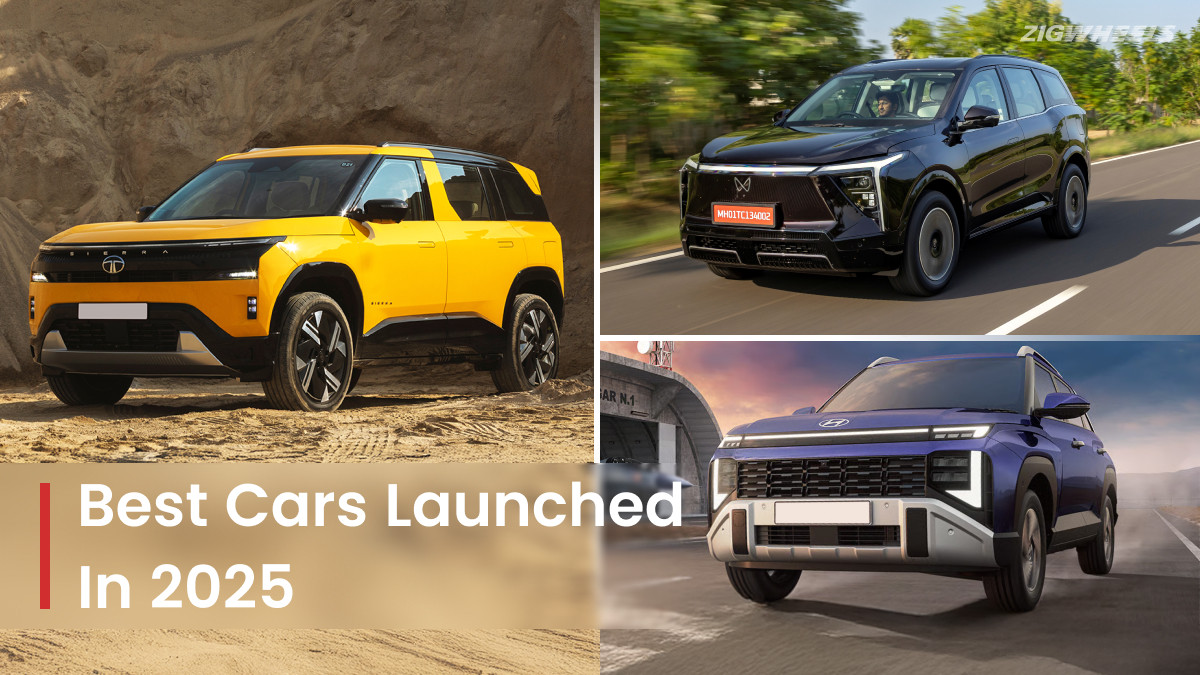
In the past few years, the Indian car market has gone through a sea-change with new technologies emerging rapidly, the ever-evolving consumer tastes and new segments being carved out. 2025 was no different as we witnessed tons of exciting launches and some revolutionary models which changed the game. As this year comes to an end, let’s reflect upon some of the biggest launches this year that truly shook up the market:
Prices (ex-showroom)
C3: Rs 4.80- Rs 9.32 lakh
Basalt: Rs 7.95- Rs 13.10 lakh
Aircross: Rs 8.29 lakh- Rs 13.69 lakh
Citroen, in a bid to take another attempt at the budget segment, heavily updated its portfolio, which included major feature upgrades and new interiors for its C3 hatchback, Basalt SUV-coupe and even the Aircross SUV. To denote these updated cars, the carmaker also added the ‘X’ suffix to the names. You can read about the C3 X, Basalt X, and Aircross X here.
C3
Aircross
Basalt
Engine
1.2-litre naturally aspirated petrol/
1.2-litre turbo petrol
1.2-litre naturally aspirated petrol/
1.2-litre turbo petrol
1.2-litre naturally aspirated petrol/
1.2-litre turbo petrol
Transmission
5-speed MT/
6-speed MT/
6-speed AT
5-speed MT/
6-speed MT/
6-speed AT
5-speed MT/
6-speed MT/
6-speed AT
Power (PS)
82 PS/
110 PS
82 PS/
110 PS
82 PS/
110 PS
Torque (Nm)
115 Nm/
190 Nm/
205 Nm
115 Nm/
190 Nm/
205 Nm
115 Nm/
190 Nm/
205 Nm
Under the hood, all three cars remain unchanged, and still get powered by a choice of 1.2-litre naturally aspirated petrol engine and 1.2-litre turbo petrol engine options, paired to 5-speed manual, a 6-speed manual, and a 6-speed torque-converter automatic gearboxes.
Price: Rs 5.76- Rs 8.60 lakh (ex-showroom)
The Renault Triber remains one of the most affordable three-row 7-seater MPVs on the market, and with the 2025 update, Renault infused some freshness to make it feel more modern and feature-loaded. It retains its flexible seating layout, which accommodates up to seven people, despite its compact footprint. You can read all about these updates here.
Engine
1-litre naturally aspirated petrol
Transmission
5-speed MT/
5-speed AMT
Power (PS)
72 PS
Torque (Nm)
96 Nm
Under the hood, it retains a 1-litre petrol engine producing 72 PS and 96 Nm, which comes paired to a choice of 5-speed manual and 5-speed AMT transmission options.
Price: Rs 6.30- Rs 10.51 lakh (ex-showroom)
In May this year, Tata refreshed its premium hatchback, the Altroz, with comprehensive exterior and interior updates, along with an expanded feature list. This includes a sharper design language, new interiors and features such as a 10.25-inch digital instrument cluster, 360 degree camera and a wireless charger. In terms of safety, the Altroz facelift carries a 5-star BNCAP safety rating along with features such as 6 airbags, electronic stability control, hill hold assist and front and rear parking sensors.
Engine
1.2-litre naturally aspirated petrol
1.2-litre petrol +CNG
1.5-litre diesel
Transmission
5-speed MT
6-speed DCT
5-speed AMT
5-speed MT
5-speed MT
Power (PS)
88 PS
74 PS
90 PS
Torque (Nm)
115 Nm
103 Nm
200 Nm
Under the hood, the Altroz facelift is powered by 1.2-litre petrol and CNG, and 1.5-litre diesel engine options, all of which come paired to a 5-speed manual transmission. In addition to this, the petrol variants also get an option of 6-speed dual-clutch automatic and 5-speed AMT gearbox options for added convenience.
Prices (ex-showroom)
Venue: Rs 7.90- Rs 15.69 lakh
Venue N-Line: Rs 10.55- Rs 15.48 lakh
Hyundai’s popular Venue also underwent a full generation upgrade, with a sleeker and sharper exterior design, more upmarket interiors and a major feature upgrade as well, which includes equipment such as twin 12.3-inch screens for infotainment and digital instrument cluster, wireless Android Auto and Apple CarPlay, ventilated front seats, moon-white ambient lighting and an 8-speaker Bose audio system. The Venue’s safety suite also saw a big upgrade with the introduction of a Level-2 ADAS suite in addition to 6 airbags, electronic stability control, electronic parking brake with auto-hold, 360 degree camera, hill hold assist and front and rear parking sensors.
Under the hood, it still remains powered by 1.2-litre petrol, 1-litre turbo-petrol and 1.5-litre diesel engine options. The 1.2-litre petrol comes paired to a 5-speed manual only, while the turbo-petrol and diesel get both manual and automatic transmission options. Here are the detailed specifications of the powertrains offered on the new Venue:
Engine
1.2-litre naturally aspirated petrol
1-litre turbo petrol
1.5-litre diesel
Transmission
5-speed MT
6-speed MT
7-speed DCT
6-speed MT
6-speed AT
Power (PS)
83 PS
120 PS
116 PS
Torque (Nm)
115 Nm
172 Nm
250 Nm
Notably, Hyundai also introduced the sportier N-Line version alongside the regular Venue, which gets sportier design elements, an all-black interior theme with red accents and some more enthusiastic touches such as a quicker steering rack, throatier exhaust note and stiffer suspension to drive home the ‘sporty’ feel. The Venue N-Line can be had with a 1-litre turbo-petrol engine paired to 6-speed manual and 7-speed DCT gearbox options:
Engine
1-litre turbo petrol
Transmission
6-speed MT
7-speed DCT
Power (PS)
120 PS
Torque (Nm)
172 Nm
Price: Rs 8.67- Rs 15.94 lakh (ex-showroom)
The arrival of Syros offered Kia a competitive edge with a second product in the subcompact SUV segment, alongside the Sonet. Positioned below the Seltos, the Syros stands out with its upright, boxy stance, spacious interior and a long feature list.
Feature highlights of the Syros include 12.3-inch screens for the digital instrument cluster and touchscreen infotainment system, along with a 5-inch unit in the middle for climate control, a panoramic sunroof, wireless Android Auto and Apple CarPlay, front and rear ventilated seats and flush door handles. Safety is taken care of by 6 airbags, Level 2 ADAS, 360 degree camera, electronic stability control and front and rear parking sensors. It has also scored 5 stars in the BNCAP crash tests.
The Syros is powered by 1-litre turbo-petrol and 1.5-litre diesel engine options, both of which can be had with manual and automatic transmission options. Here are the detailed specifications of the powertrains:
Engine
1-litre turbo petrol
1.5-litre diesel
Transmission
6-speed MT
7-speed DCT
6-speed MT
6-speed AT
Power (PS)
120 PS
116 PS
Torque (Nm)
172 Nm
250 Nm
Price: Rs 10.50- Rs 19.99 lakh (ex-showroom)
The Maruti Victoris has significantly boosted Maruti Suzuki’s presence in the compact SUV segment in the short time it has been on the market. Positioned as the flagship in the Maruti Arena lineup, the Victoris is primarily aimed at a younger audience seeking a premium experience, but with the peace-of-mind that comes with a Maruti Suzuki.
As part of this, the Victoris comes with a new design direction for Maruti’s, with a subtle and classy look along with a long feature list that includes equipment such as a 10.1-inch touchscreen infotainment system, an 8-speaker Infinity sound system, wireless phone charger, ventilated front seats, 64-colour ambient lighting, a panoramic sunroof and a head-up display. Safety-wise, it gets a Level 2 ADAS suite, 6 airbags, electronic parking brake, 360 degree camera, hill hold assist, electronic stability control and front and rear parking sensors.
The Victoris is powered by 1.5-litre petrol, CNG and strong-hybrid powertrains, along with an optional all-wheel drive setup as well..
Engine
1.5-litre naturally aspirated petrol
1.5-litre naturally aspirated petrol + CNG
1.5-litre Strong Hybrid
Transmission
5-speed MT/
6-speed AT
5-speed MT
e-CVT
Power (PS)
103 PS
101 PS (Petrol)/
88 PS (CNG)
92 PS
Torque (Nm)
139 Nm
137 Nm (Petrol)/
121 Nm (CNG)
122 Nm
Powertrain
FWD/ AWD
FWD
FWD
Notably, the Victoris has also won the Indian Car Of The Year 2026 award, besides also being 5-star rated in both the BNCAP and GNCAP crash tests.
Price: Rs 11.08- Rs 20.71 lakh (ex-showroom)
Positioned as a premium alternative to the Carens, Kia introduced the Carens Clavis as an upmarket, feature-rich model in the mass-market MPV segment. The Carens Clavis, unlike the Carens, is available in both 6 and 7-seater configurations. The features list of the Carens Clavis includes a dual-pane panoramic sunroof, 12.3-inch touchscreen, 360-degree camera, ventilated front seats, and an 8-speaker BOSE sound system with multiple drive modes.
Under the hood, the Carens Clavis gets a choice of 1.5-litre petrol, turbo-petrol and diesel engines. Here are the detailed specifications:
Engine
1.5-litre naturally aspirated
1.5-litre turbo petrol
1.5-litre diesel
Transmission
6-speed MT
6-speed MT/
6-speed iMT/
7-speed DCT
6-speed MT/
6-speed AT
Power (PS)
114 PS
160 PS
116 PS
Torque (Nm)
144 Nm
253 Nm
250 Nm
Price: Rs 17.99- Rs 24.49 lakh (ex-showroom)
Following the Carens Clavis, Kia electrified its premium MPV with the Carens Clavis EV, which gets similar exterior and interior styling as its petrol and diesel-powered sibling, although with electric underpinnings.
In terms of features, the Carens Clavis EV features two 12.3-inch digital displays: one for infotainment and one for the driver’s display. Additionally, the Carens Clavis EV is equipped with an auto-dimming IRVM, an air purifier with an AQI display, an 8-speaker BOSE audio system, V2L technology, and Level-2 ADAS.
The Carens Clavis EV can be had with two battery options: 42 kWh and 51.4 kWh, with a claimed range of up to 490 km from a single charge. Here’s a look at how the powertrain options stack up:
Battery Packs
42 kWh
51.4 kWh (Long Range)
Claimed Range
404 km
490 km
Power (PS)
135 PS
171 PS
Torque (Nm)
255 Nm
Price: Rs 11.49- Rs 21.29 lakh (ex-showroom)
After the Safari, Tata revived yet another iconic nameplate, with the Sierra. With the exterior largely resembling bits from the older Sierra, Tata introduced the compact SUV in a brand new avatar, marking the much-awaited comeback of the iconic nameplate, while plugging a major gap in the carmaker’s portfolio.
A retro-looking design, complimented by the boxy-stance, short overhangs, Alpine-style rear windows, and a very attractive looking rear, makes the Sierra one of the best-looking SUVs in the compact SUV space. It also comes with top features such as a three-screen layout, Level-2 ADAS, powered tailgate, a 12-speaker JBL audio system with soundbar, ventilated seats, and wireless connectivity for Android Auto and Apple CarPlay.
Not only did it come with a plethora of features, but the biggest highlight was the introduction of a brand-new 1.5-litre turbo petrol unit, which will soon be available with the Harrier and Safari SUVs. It also comes with a 1.5-litre NA petrol and 1.5-litre diesel unit, coupled with manual and automatic transmissions.
Engine
1.5-litre naturally aspirated petrol
1.5-litre Turbo Petrol
1.5-litre Diesel
Transmission
6-speed manual/
7-speed dual-clutch automatic
6-speed manual/ 7-speed dual-clutch automatic
6-speed manual/ 7-speed dual-clutch automatic
Peak Power (PS)
106 PS
160 PS
118 PS
Peak Torque (Nm)
145 Nm
255 Nm
260 Nm
Powertrain
FWD
Price: Rs 18.02- Rs 24.69 lakh (ex-showroom)
After introducing the Creta facelift last year, Hyundai launched its electric sibling, the Creta Electric, making the Creta brand one of the most versatile on the market with petrol, turbo-petrol, diesel and electric powertrain options. Apart from its electric heart, the Creta Electric looks largely similar to the Creta facelift but gets an EV-specific pixelated grille (with hidden charging port), new colour options, and a new 3-spoke steering wheel.
It is offered with two battery options: a 42 kWh pack with a claimed range of 420 km and a 51.4 kWh long-range battery option with a claimed range of up to 510 km. With a claimed top speed of 180 kmph, and a 0-100 kmph sprint in claimed 7.9 seconds, the Creta Electric is an extremely promising product from Hyundai, building on the success of the Creta.
Battery Packs
42 kWh
51.4 kWh (Long Range)
Claimed Range
420 km
510 km
Power (PS)
135 PS
171 PS
Torque (Nm)
255 Nm
Drivetrain
FWD
Price: Rs 19.95- Rs 30.20 lakh (ex-showroom)
Another EV that made a lot of buzz this year, is the Mahindra XEV 9S which is the carmaker’s third product on the born-electric INGLO platform after the XEV 9e and BE 6, which were introduced earlier this year.
Besides the futuristic styling, it also gets a long list of features with equipment such as three 12.3-inch screens for the digital instrument cluster, touchscreen infotainment and passenger entertainment display, dual-zone climate control, front and rear ventilated seats, panoramic sunroof, AR-based heads-up display, multi-colour ambient lighting and a 16-speaker Harman Kardon sound system with Dolby Atmos. Safety features include 7 airbags, a Level 2 ADAS suite, electronic parking brake with auto-hold, 540 degree camera as well as front and rear parking sensors.
The XEV 9S gets a choice of 59kWh, 70kWh and 79kWh battery packs, with a claimed range of up to 679 km. Here are the detailed specifications:
Battery Packs
59 kWh
70 kWh
79 kWh
Claimed Range
521 km
600 km
679 km
Power (PS)
231 PS
245 PS
285 PS
Torque (Nm)
380 Nm
Drivetrain
RWD
Price: 21.49- Rs 30.23 lakh (ex-showroom)
The streak of electric SUVs continued with Tata introducing the Harrier EV, earlier this year. While cosmetically it remains similar to the Harrier, it is a different beast under the hood altogether.
As with recent Tata’s, the Harrier EV too is loaded with equipment such as a 14.5-inch touchscreen infotainment system, 10.25-inch digital instrument cluster, panoramic sunroof, powered and ventilated front seats and a 10-speaker JBL sound system. Safety-wise it has scored a 5-star safety rating from BNCAP, besides offering equipment such as a Level 2 ADAS suite, 7 airbags, electronic stability control, 540 degree camera, electronic parking brake with auto hold.
Underneath, it can be had with two battery packs of 65kWh and 75kWh. While the base 65kWh option is rear-wheel drive only, the 75kWh version gets both rear-wheel drive and all-wheel drive versions putting out as much as 396 PS and 504 Nm, making it one of the most powerful cars you can buy in this price bracket. Here are the detailed specifications:
Battery Packs
65 kWh
75 kWh
75 kWh
Claimed Range
538 km
627 km
622 km
Power (PS)
238 PS
396 PS
Torque (Nm)
315 Nm
504 Nm
Price: Rs 39.99- Rs 45.96 lakh (ex-showroom)
Skoda’s flagship SUV received a major overhaul this year. Visually, the Kodiaq grew in size and received noticeable changes in terms of the design, interior and a thorough feature upgrade.
Being Skoda’s flagship SUV in India, it comes equipped with a ton of features such as a 12.9-inch touchscreen infotainment system, 13-speaker CANTON sound system, tri-zone climate control, wireless charger, powered, ventilated and heated front seats with massage function and a 10.25-inch digital instrument cluster. In terms of safety, Skoda equips it with 9 airbags, Level 2 ADAS, electronic stability control, electronic parking brake with auto-hold, hill hold assist and a 360 degree camera.
Under the hood, it gets a sole 2-litre turbo-petrol engine option making 204 PS and 320 Nm. This comes paired to a 7-speed dual-clutch automatic transmission. Here are its specifications in detail:
Engine
2-litre turbo petrol
Transmission
7-speed DSG
Power (PS)
204 PS
Torque (Nm)
320 Nm
Powertrain
AWD
So, 2025 was not just about novelty. The cars mentioned here and those left out catered to a very specific criterion; it served a purpose, either by practicality, budget, multiple powertrains, safety or strong legacy. But one thing that remained constant was evolution. Each car mentioned in our list gave something new, fresh, and unique to the buyers of the segment, making aspirational features accessible while looking good in the process.
We feel, these cars didn’t just launch in 2025, it defined an entire generation of new-age car buyers to a new direction.
Which of these cars stood out to you? Let us know in the comments.
Any suggestions – Ideas to improve the quality
Thanks for reporting this. The reported comment will be shortly removed from Zigwheels &
will be sent for moderation.
Maruti Suzuki e Vitara: What Are Its Competitors?
Features The Hyundai Creta Electric Gets Over The BYD Atto 3
Localisation Is The Secret Sauce Behind Hyundai Creta Electric's…
Hyundai Creta Electric: The Best Road-Trip Companion When It Comes To…
Hyundai Creta Electric: All-round Performance!
Hyundai Creta Electric vs Mahindra BE 6: How Does It Feel Driving The…
How Is It Like To Drive The Hyundai Creta Electric?
Top 6 India Car News Over The Past Week Wrapping Up With The Auto…
Starting From Creta Electric To Cool Auto Rickshaw Concepts, Here Are…
India’s largest automotive community
Have any questions about Venue ? Ask Now
Have any questions about Creta Electric ? Ask Now
Choose your city
Thank you! Your question has been submitted and is under moderartion.
You will receive all communications on :