
Budget 2025: Reeves says she doesn't deny 'impact' of Budget tax rises but says changes are 'necessary' – BBC
Reaction to Budget as Millions to Pay More Tax
BBC News
This video can not be played
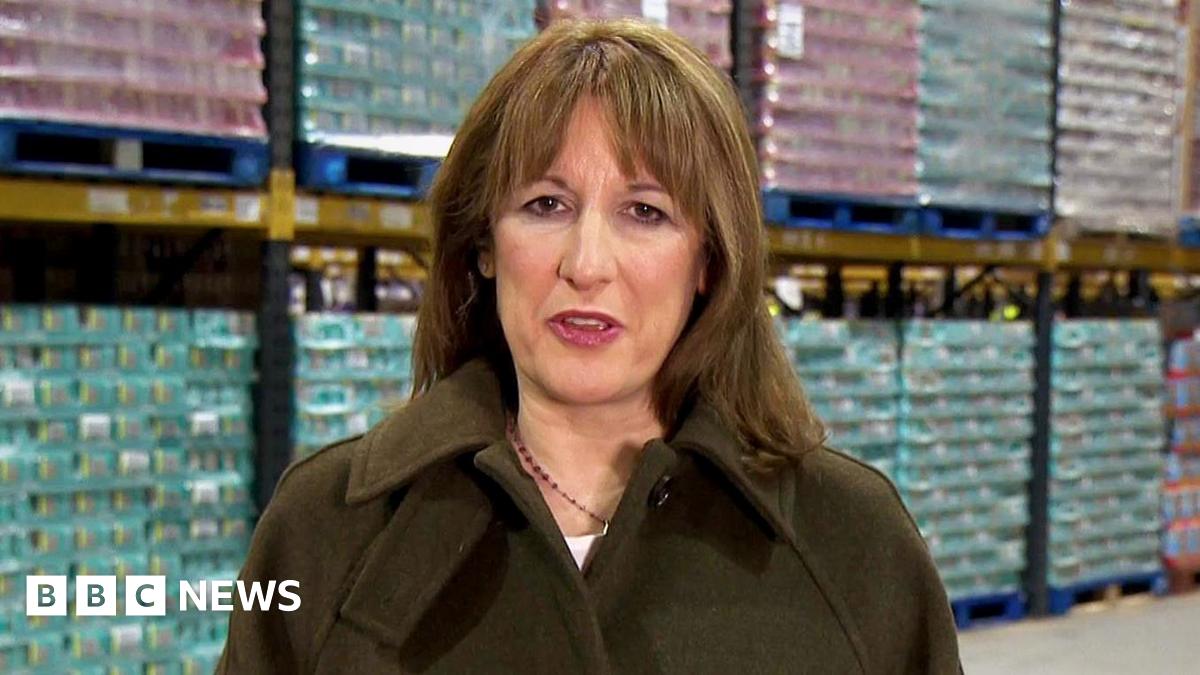
Chancellor Rachel Reeves says she doesn't deny the impact on "ordinary" people after raising taxes yesterday – here's her Budget at a glance
But she says the changes are "fair" and "necessary" – and insists they don't break Labour's election pledges
Many will pay higher rates of tax as their pay increases, after Reeves froze income tax thresholds until 2031
There are also new taxes on homes worth more than £2m in England; a pay-per-mile charge for electric vehicles; tax on pension contributions above £2,000; and changes to Isa rules
Meanwhile, the two-child cap on means-tested benefits will be lifted in April – BBC Verify have assessed the impact on child poverty
Shadow chancellor Mel Stride insists Labour has broken its election promises – while Liberal Democrat leader Ed Davey says Reeves is taxing ordinary people at record levels
Edited by Johanna Chisholm and Owen Amos
That's a bit rich, isn't it?
That's the question Shadow Chancellor Sir Mel Stride is asked on the Today programme after the Tories criticised Labour's tax rises. It was, after all, a Conservative government that first froze tax thresholds in 2021.
Stride says the Tories had particular challenges, most notably the Covid pandemic. The government intervened, he says, to protect jobs at great expense which had "fiscal consequences".
The number of people paying the higher rate of tax doubled during the Tory years, it's pointed out.
But Stride says there was also the Russian invasion of Ukraine, and the impact it had on inflation.
There is a difference between what happened during the Tories' time in office, Stride says, and "what is a clear manifesto breach" by Labour.
He says Labour made the promise not to raise taxes on "working people" – a promise that was repeated by Reeves in last year's Budget.
"That is precisely what she has done," he says.
Reeves is now asked about electric vehicles, and the new per-mile tax announced in yesterday's Budget. How will the mileage be calculated?
Reeves mentions MOTs, where mileages are recorded – but it's pointed out that new cars don't have annual MOTs.
Reeves says the policy is not coming into effect until 2028, which will give the government time to make sure it works. "Everyone can check the mileage on a car, it's not a difficult thing to do," she adds.
Reeves is pressed on who drivers will report their mileage to.
She doesn't answer the question directly, repeating that the policy won't come into effect until 2028, giving the government time to work the details out.
Reeves is now pressed on that manifesto commitment we mentioned in our previous post.
She's asked to contrast that commitment with her acknowledgement that she's asking ordinary people to pay more by freezing income tax thresholds until 2031.
Reeves says it was clear in Labour's manifesto that her promises related solely to a pledge not to increase income tax rates.
But, she says that she recognises that freezing thresholds is asking people to contribute a bit more.
The chancellor is pressed on why she is shy of saying the word tax.
Reeves doesn't directly answer the question, and repeats that Labour is freezing tax thresholds for a further three years (i.e. they will be frozen until 2031, rather than 2028 as planned).
She goes on to say that she hopes to ease pressures on the cost of living and bring inflation down.
Pressed on whether the government has broken promises to the public, Reeves says she recognises that freezing tax thresholds does mean that "ordinary" people will pay more tax, and she doesn't deny the "impact".
She calls the changes "fair and necessary" and says: "I've kept the contribution to a minimum by changes elsewhere."
Some of these changes, she says, includes asking online gambling companies and people who own properties worth £2m or more to pay more.
Chancellor Rachel Reeves is first asked about the early release of the Budget by the Office for Budget Responsibility yesterday.
She says the OBR mistake was "clearly unacceptable and disappointing".
She confirms that OBR chair Richard Hughes has written to her apologising for the breach. You can read what the "mortified" Hughes told us earlier here.
The chancellor is speaking to our colleagues on BBC Breakfast now – watch live at the top of the page and stay here for key lines. Henry Zeffman
Chief political correspondent
The immediate questions for Rachel Reeves in the aftermath of the Budget were always going to be what the markets made of it – and what Labour MPs made of it.
On those two fronts, she’ll be very pleased this morning. The market reaction was pretty benign, and the reaction of Labour MPs was more than that, it was pretty positive – if not quite exclusively positive.
Most Labour MPs I have spoken to are delighted particularly at the abolition of the two-child benefit cap. A few, though, are questioning what’s happened to the focus on growth which Reeves said for years in opposition was her number one priority.
This Budget also lays out the likely shape of the political debate for the coming months and probably years.
This is a Labour government embracing a characterisation as high-tax, high-spend. That spending, they say, is for a purpose: for improved public services, to lift children out of poverty, to reduce national debt.
But it would be wrong to assume the positive mood among Labour MPs means the questions around Keir Starmer’s leadership will dissipate.
While Labour MPs may be content today, a lot of them still think they are going to lose their jobs in at the next general election. It’s not until that changes that the conversation around Keir Starmer will change.
More from OBR chair Richard Hughes, who is asked whether any of the measures announced by Rachel Reeves yesterday meet the organisation's threshold for boosting growth.
"In this particular Budget, none of the measures either positive or negative… would have a material affect on our forecast," he responds.
"Both taxes and spending are up significantly in this Budget," he adds, explaining that the tax burden is 1% of GDP higher by the end of the forecast, while total spending will be about 1% of GDP higher too.
Meanwhile freezing income tax thresholds – which Reeves announced will last until 2031 – will bring "hundreds of thousands" more people into tax, Hughes says.
The government has previously said economic growth is its number one priority
The Office for Budget Responsibility chairman Richard Hughes tells the BBC he is "personally mortified" by yesterday's error, which saw the organisation release details of Rachel Reeves's Budget early.
Speaking to the Today programme, Hughes says he takes "full responsibility" for the mistake and adds: "We let people down yesterday and we'll make sure that doesn't happen again."
He says there will report to the Treasury after a full investigation into what happens – and says the OBR has hired a cybersecurity expert to help them understand what went wrong.
Liberal Democrat leader Ed Davey, speaking on the Today programme, says Rachel Reeves is now taxing "ordinary people to record levels".
Referencing Reeves's decision to freeze income tax thresholds until 2031, Davey calls it a "stealth tax" that will drag more low-paid people into paying income tax (see our chart below).
Nick Robinson points out that Lib Dems have previously called for several of the policies announced yesterday – including a mansion tax, a lifting of the two-child benefit cap, and an increase in the minimum wage.
"These are all your policies," Robinson says.
Davey pushes back, saying some of these were the party's policies many years ago, rather than today – such as a mansion tax.
Pressed on whether wealthy people should be taxed more on their homes, Davey says there are "fairer" ways to raise money – for example through reforming capital gains tax.
He suggests some people in high value houses – such as retirees – might have a lot of their wealth in assets, but with low income.
The Green Party welcomes some aspects of Reeves's budget – but its Treasury spokesman Adrian Ramsay says there are no "transformational changes" that would improve the lives of ordinary people.
He tells BBC Breakfast that freezing income tax thresholds will "particularly impact low and middle income earners" when the government could instead have taxed the "very richest in society".
On the government’s plans to implement a pay-per-mile tax for electric vehicles, Ramsay says it remains essential provide incentives for people to switch from petrol and diesel cars.
We're now hearing from Ruth Curtice, chief executive of the Resolution Foundation think tank, which focuses on people on lower incomes.
She tells BBC Radio 4's Today programme that some of the tax-raising policies are "delayed pain".
The mansion tax in England will begin in 2028, for example, with new taxes on pension contributions coming in from 2029. And the freeze on income tax thresholds – which was due to end in 2028 – will now be extended until 2031.
In terms of living standards, Curtice says this decade continues to look "really tough".
She points to a challenging jobs market – with yesterday's economic forecast showing a higher unemployment rate than previously forecast in March.
The UK''s tax burden, as a percentage of GDP, is set to rise over the next five years
The Institute for Fiscal Studies is a leading economic research group. Its associate director, Ben Zaranko, has just told BBC Breakfast the three "big things" that Reeves's Budget does:
Chancellor Rachel Reeves unveiled tax rises yesterday that will raise £26bn a year by 2029/30.
According to the OBR, the changes will bring the UK's tax take to an all-time high of 38% of national income in 2030-31. Here's a breakdown:
And after yesterday's early publication mistake, the Chair of the OBR Richard Hughes will appear on the Today programme around 07:10.
You'll be able to watch and listen to all those guests in this page – and we'll write up all the main lines.
Coverage of the Budget dominates the front pages of today's newspapers, with many featuring the chancellor's red Budget box pose outside No 11.
"High welfare, high tax" is the assessment of the Times, external, while the Financial Times, external says the Budget "smashes tax records".
The i Paper, external characterises it as a "spend now, pay later" Budget, with spending pledged immediately and income tax bracket freezes kicking in later this decade. The plans will "squeeze" Britain's middle class, according to the Independent, external.
Tax increases are called "spiteful raids on strivers" in the Daily Mail, external and "broken promises" in the the Daily Telegraph, external, while the Daily Star, external uses image-altering to portray "Rachel Thieves" as the "Grinch Chancellor".
"You're paying!" declares Metro, external, while the Guardian, external quotes Reeves directly in its headline: "I am asking everyone to make a contribution".
The Daily Mirror, external suggests scrapping the "cruel" two-child benefit reflects a "Budget with a Labour heart".
The Daily Express, external and the Sun, external quote Conservative leader Kemi Badenoch's description of the Budget as one for "Benefits Street", with welfare spending expected to approach "£406bn by 2030-31".
Read our full review of today's papers here.
40: How many minutes before the Budget the OBR mistakenly released key details – or at least, when the media picked up on the mistake – leading to an unprecedented pre-Budget confirmation of sensitive financial information
26: How many billions of pounds the tax rises in the Budget will introduce by the end of the decade
450,000: How many fewer children the government estimates will live in "relative low income" by 2029-30 after it scrapped the two-child benefit cap
2031: The year when the current freeze on income tax and National Insurance thresholds ends in England, Wales and Northern Ireland – Reeves extended it by three years beyond the Tories' plans for 2028
2,000,000: How many pounds your house has to be worth to start paying a new annual charge of £2,500, rising to £7,500 for properties of £5m, in England from April 2028
12.71: How many pounds an hour the new minimum wage will be for over-21s from April, with the minimum wage for 18 to 20-year-olds rising to £10.85
38: The tax take as a percentage of national income in 2030-31 after yesterday's changes, according to the OBR forecast – a record high
The red Budget box has been put away for another year, and we're now into the next phase: reaction.
It's not to be taken lightly – not all Budget measures in the past have survived contact.
The government will be pushing what it sees as the benefits. The opposition parties probing for weakness.
And then there are the markets, which had a broadly positive reaction in the hours afterwards, but will not be throwing away their tea leaves just yet.
And beyond the usual drama of Budget day, yesterday also offered up an unprecedented moment – the confirmation of Budget details before they were announced in the House of Commons by the chancellor.
That blunder was delivered by the Office for Budget Responsibility (OBR), which accidentally published one of its own documents – containing highly sensitive information about what the Budget included – online about 40 minutes before the real thing.
There was a lot of detail coming thick and fast yesterday. We'll get you caught up in our next few posts. Matt Spivey
Live editor
Chancellor Rachel Reeves today delivered her second Budget.
Before she began speaking in the Commons, the details of her Budget had already been mistakenly released by the OBR, the UK's budgetary watchdog.
While MPs read through her prematurely released plans on their phones, the chancellor put her Budget into words – including the scrapping of the two-child benefit cap and a range of tax increases.
But, the real surprise was that the government's financial position is nowhere near as bad as had been suggested in the run-up, writes our economics editor Faisal Islam – he has broken down why Reeves is making you pay more tax.
For many, the most important question is how this Budget will affect them. The impacts will vary based on circumstances, but our cost of living correspondent has unpicked what it all means for you and your money.
And, we've unpacked how Reeves's changes will take a chunk out of your future pay.
The Budget has prompted reaction from markets, politicians and people across the country – and there'll be plenty more of that to come in the days ahead.
We're now bringing our live coverage to an end. Our colleagues have a full write up of the day with all the latest, and we'll be back first thing tomorrow right here on this page.  Chris Mason
Political editor
After a pre-Budget period critics lambasted as shambolic – a hokey cokey of ideas first in then out – today took a final shambolic twist.
The entire Budget published early by accident by the OBR, the Office for Budget Responsibility, which took responsibility sharpish for the jaw-dropping cock-up.
A livid chancellor humiliated by the independent watchdog and forecaster.
This was a Budget Rachel Reeves sought to brand as proudly, defiantly Labour: tax raising, a benefits boost to lift children out of poverty.
The government argues all but the richest 10% of households will benefit by the end of the decade. Among the criticisms, an argument spending and the tax burden are out of control.
Downing Street, No10 and No11, will hope the exuberant waving of order papers from Labour backbenchers afterwards carries on – metaphorically – in the months ahead.
That a Budget at least partially designed to please despondent Labour MPs buys the prime minister and chancellor some time.
Two other developments today could prove key in whether they achieve that. Giving herself more headroom in her numbers – more space before breaking her self imposed rules to reassure the markets – should mean events are less likely to jeopardise her plans.
As should the OBR checking if the government is meeting those rules just once a year, instead of twice.
The chancellor may also reflect that this halves the likelihood of a repeat of today’s foul up that stole her thunder.
To watch and listen, you need to enable JavaScript in your browser.
Reaction to Budget as Millions to Pay More Tax. BBC News. Video
BBC Radio 4 Today programme. BBC Radio 4. Audio
Copyright © 2025 BBC. The BBC is not responsible for the content of external sites. Read about our approach to external linking.


