
BYD preparing to smash Tesla into oblivion: Tesla lost the EV sales battle in 2025 – and it could lose the war in 2026 as the 2026 BYD Atto 1, Atto 2, Sealion 8, Denza B5 and B8 arrive to bolster the Chinese brand's range and Tesla gets no new cars – Inner East Review
Tesla’s electric vehicle dominance came to an end in 2025, losing its global sales crown to BYD as it experienced its second consecutive year of declining sales.
But most worryingly for the American brand, there is no reason to believe 2026 will be any better.
For the first time official sales data credited BYD with 2.24 million electric vehicle sales, comfortably ahead of Tesla’s 1.64 million. While a win is a win, it’s the reasons why BYD trumped Tesla that should be of most concern to Elon Musk and his team.
BYD out-performed Tesla despite suffering its weakest sales growth in its domestic market, but while enjoying sales growth in Europe and Australia. Notably, while Tesla remained Australia’s biggest seller of electric vehicles, with 28,856 recorded sales, BYD closed in dramatically, notching 25,207 EV sales (for direct comparison, that figure excludes its plug-in hybrid models).
What really helps BYD’s cause moving forward is its focus on expanding its offerings and markets globally. Canada recently removed some of its restrictions on Chinese-made cars, which opens up a new growth region, and Europe has eased its hardline stance too.
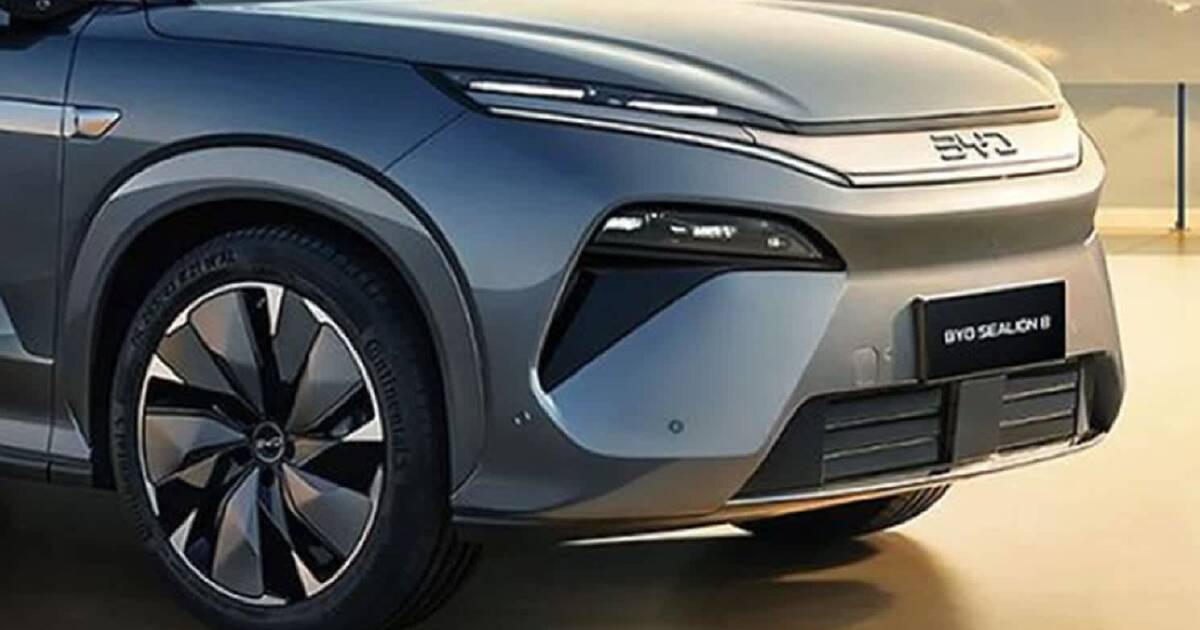
BYD has already confirmed the Atto 1, Atto 2, Sealion 5 and Sealion 8 will all be in Australian showrooms shortly, joining the Atto 3, Dolphin, Seal, Sealion 6 and 7 as well as the Shark 6.
And that’s just the models confirmed, with either all-new or already available options likely to be added when the time is right.
In contrast, Tesla is betting, once again, on technology. Musk’s current focus (at least in terms of Tesla) is growing both its robotaxi business and developing humanoid robots. Not a new, more-affordable car to compete with the Atto 1, but robots.
BYD, on the other hand, is focused on making cars and expanding its portfolio to reach new customers. It doesn’t take a deep automotive industry analysis to assess which plan is the more likely chance of success.
While there may well be a need for millions of humanoid robots suddenly over the next decade, the more humble reality is most people will be happy with a new car – even one they have to drive themselves.
Which is really the difference between the two companies. BYD is a car manufacturer, Tesla is a technology company that happens to make cars. Musk has always seen Tesla as something different, something unconventional and the hard reality is that will ultimately limit its potential as a car maker.
Don’t believe me? Well, just look how much time and resources Toyota, the world’s biggest car company, is investing in humanoid robots…
That’s the underlying goal for BYD – beating Toyota. Becoming the biggest EV brand is merely a stepping stone along the way to its end goal. Although, achieving that will be a much harder task.
In the short-term, there is seemingly little chance Tesla can recover the lost ground to BYD. The Chinese brand should be able to grow further in 2026, while Tesla faces an uncertain year ahead with no brand-new products coming and seemingly waning interest in what is already available.
What Tesla needs in the short-term (and long-term) are more vehicles to sell. The Model 3/Y market is saturated, particularly in Australia, and the much-hyped Cybertruck has been a sales flop. Without new products to drive sales, Tesla will have to get comfortable not being the world leader in electric cars.
Advertisement
Advertisement


