Jack Doohan's Formula 1 career could have been saved if the sport implemented a small change a year earlier – Nine
Nine’s Wide World of Sports
As the FIA now fine tunes their regulation changes for the 2026 season, a cruel irony has emerged for Jack Doohan after his monster crash in Suzuka.
A tweak that could have saved his career will be implemented a year too late.
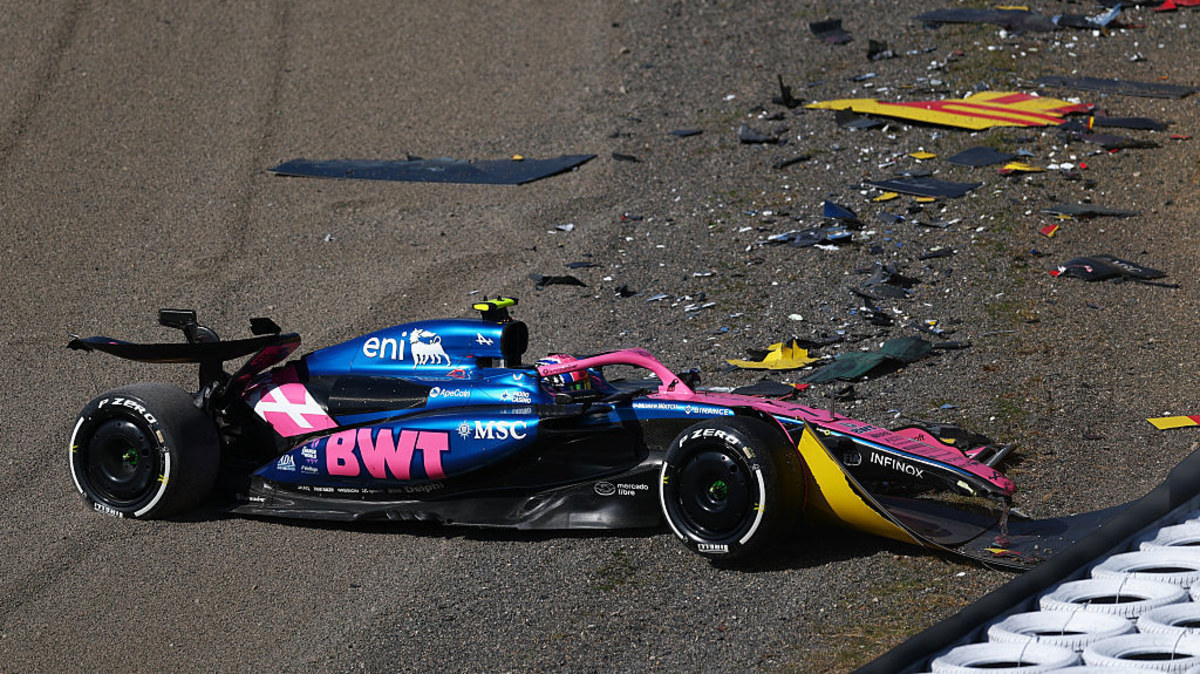
At the Japanese Grand Prix early in 2025, Doohan slammed his Alpine car at breakneck speed into the barriers early in practice.
READ MORE: Snicko operator admits fault behind DRS howler that allowed Alex Carey to score a century
READ MORE: Carlos Alcaraz ends seven-year partnership with coach Juan Carlos Ferrero
READ MORE: Tim Tszyu revives boxing career against previously undefeated American
After the incident, it was revealed that the Australian had not manually turned off the Drag Reduction System (DRS) on his rear wing going into turn one.
It is an unusual quirk of the Suzuka track. Drivers need to remember to manually flick off the DRS into turn one instead of the system automatically shutting as drivers lift off the throttle or brake.
Turn one at Suzuka requires drivers to manually turn DRA off. Getty
This crash caught Doohan by surprise and was one of the key factors for the Australian's mid-season axing from Alpine for Franco Colapinto.
Reflecting on the crash in Japan, he said: "First of all, I am okay after the incident. It was a heavy one, something that caught me by surprise, and I will learn from it."
But it wasn't meant to be and those became his famous last words. Three races later, Doohan was sent on his way out of the Formula 1 paddock.
In 2026, F1 cars are set to have active aero.
This will "dynamically adjust the angle of both their front and rear wings depending on where they are on the circuit," according to the FIA website.
But it is a minute additional system added to the 2026 cars that may have saved Doohan and his six-race career.
Jack Doohan's crash in Suzuka may not have happened with the 2026 cars. Formula 1 via Getty Images
F1 cars will be set to have an 'auto turn-off' feature, where certain zones will have a lap distance turn off that will ensure drivers do not try and take certain corners with either their rear or front wings 'open'.
Had this system been in place during the 2025 season, Doohan would not have careened into the barriers and caused his team a huge amount of rebuilding stress during the Suzuka weekend.
Instead, the 'auto turn-off' feature would have engaged before the entry of turn one, maintaining the level of downforce in his Alpine car and keeping him on the tarmac through the quick corner.
In 2026, cars will have their front and rear wings in the default 'closed' position through circuit corners to maintain downforce.
They will then move into the 'open' position in certain areas to engage a low-drag mode, which will increase top speed.
Rear wings can be opened on the straights, much like the DRS system we know today, and drivers will not need to be within one second of the car in front of them to open their wings.
Jack Doohan had a quick career in F1 spanning only six races. LAT Images
Drivers will still need to manually press a button to open the wings for each zone and, similar to the system now, they can manually close it or the system will automatically close if a driver brakes or lifts off the throttle.
The 'auto' feature will only turn on if a driver has not manually turned off the system or forgotten to when in a particular area of the circuit, including high-speed corners.
As this new feature was not implemented on the cars in 2025, we'll never know if Doohan would have been saved by this improved aspect.
© 2025 Nine Entertainment Co.