UK number plates explained: what the ‘26’ plate means for you – Carwow
February 02, 2026 by Siobhan Doyle
The ‘26’ number plate hits the roads this March 2026 – here’s what you need to know.
You never have long to wait for the next number plate change. In the UK, the age-identifying characters on plates are updated every six months. Currently, all newly registered cars carry the 75 plate – but the new ‘26’ plate will arrive this March.
The twice-yearly change always sparks extra interest in the new car market. Many buyers enjoy having the latest registration, so the switch often triggers a noticeable spike in UK new car sales, as drivers rush to get the newest plate on their driveway.
With the new ‘26’ plate arriving this March, carmakers and dealers will be rolling out special offers and tempting finance deals. If you’re thinking of buying a new car, it’s worth keeping an eye out for low-rate finance or manufacturer contributions.
Even if the new plate itself isn’t a priority for you, understanding UK number plates is useful. Knowing a car’s age can help when buying used, and being aware of rules around plate colour, font, size, and spacing can save you from fines – or a very awkward chat with the local constabulary.
And if you enjoy a pub quiz, there are plenty of tricky number plate facts that could earn you bragging rights. Our guide to the UK’s ‘26’ plate covers them all.
Did you know if you are after a new car with the latest numberplate you can buy a new car right here on Carwow? And you can also sell your car, too. We’re here to help you through every step of your car-changing journey.
The 75 number plates were released in September 2025 and will remain on all cars registered between 1 September 2025 and the end of February 2026. From 1 March 2026, the new ‘26’ plates will be used for all cars registered until the end of August 2026. The next batch, the ‘76’ plates, will then arrive in September 2026.
This March and September changeover of number plates has been in place since 1999, and the two-letter code followed by the date number system has been in use since 2001. The previous system relied on single letters to indicate a year (for example, D-reg for 1986-87, with a single plate change in August).
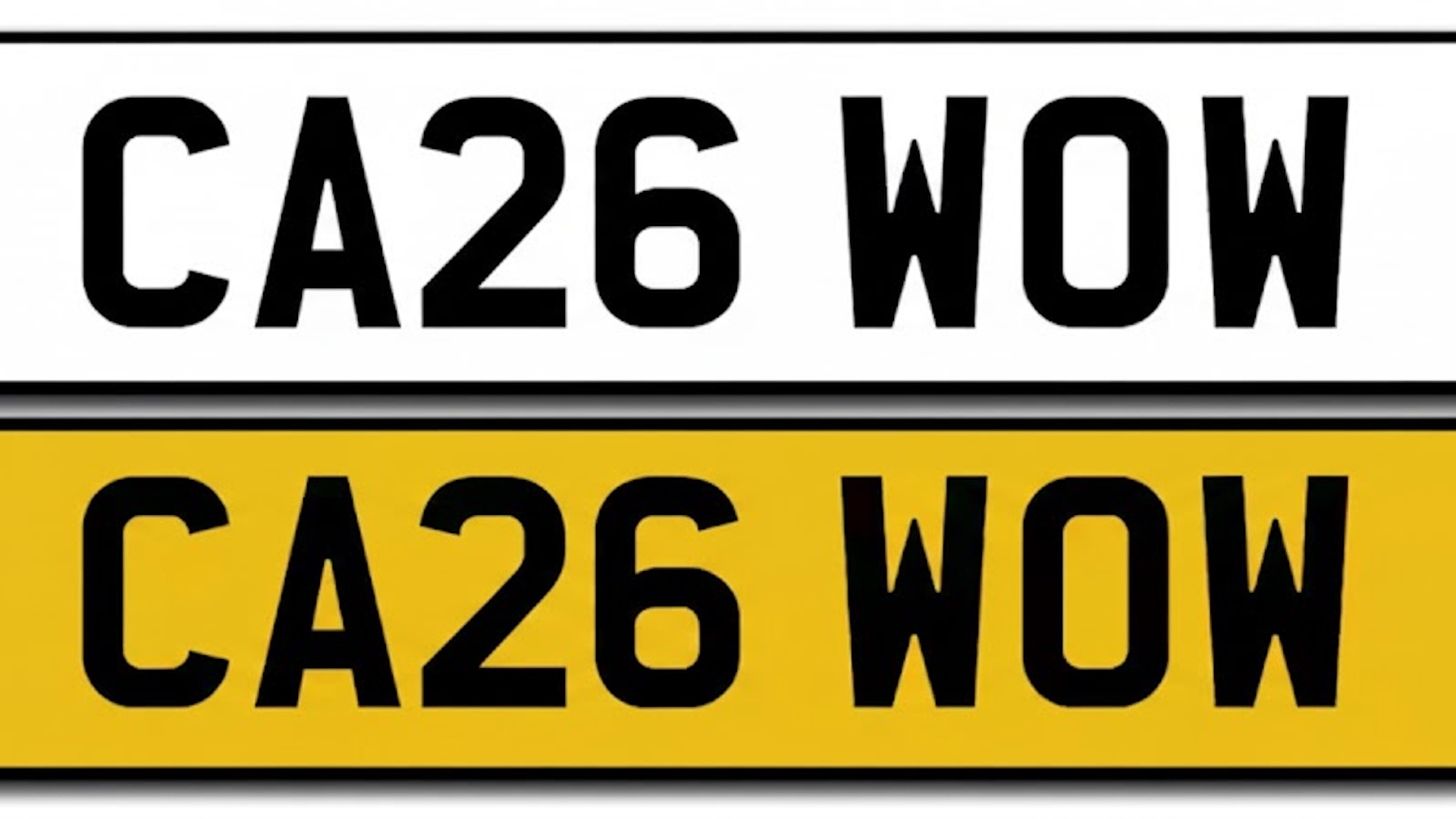
From March, the 26 plate is made up of the third and fourth characters on a plate, and it’s one of three elements that make up a standard number plate. These comprise:
Number plates issued from March to September contain two numbers representing the year, while the plates issued from September plates are the year plus 50.
You can see how this will pan out until 2029 here:
What will new car reg plates look like in 2030? Under the current system, you will see 30-plate cars from 1st March and then 80-plate cars from 1st September.
There are strict rules concerning the specification of the letters and numbers in the reg plate. These include:
Since December 2020, if you buy a fully electric car, you can choose to have a green number plate. These plates have a green flash on the left side to show your car produces zero tailpipe emissions.
You don’t have to have a green plate if you don’t like the look – standard plates are still fine. Dealers may fit them automatically on new electric cars, but it’s not a legal requirement.
Right now, green plates don’t automatically give you extra perks, such as free parking or exemption from congestion charges, although some local councils may offer benefits for zero-emission vehicles.
It’s illegal to put a green plate on a petrol, diesel, or hybrid car, and doing so won’t give any advantages. Green plates must also follow all the usual rules for UK number plates, like size, font, spacing, and the British Standard mark.
Private number plates – also called personalised, cherished, or vanity plates – are registration numbers you can choose because of the letters and numbers they contain. For example, they might show a name, initials, a memorable date, or just a combination you like.
You can buy personalised plates directly from the DVLA, or, if they’re already in use, from auctions, traders, or private sellers.
Some people choose plates for fun, while others keep the same plate over the years because it has personal meaning. You can pick almost any combination, as long as it isn’t offensive or inappropriate.
It’s important to know that all plates must follow the official size, spacing, and font rules, even if the plate has fewer than seven characters. You cannot change the spacing, font, or use screws or other fittings to alter how the letters and numbers look. Breaking the rules could lead to a £1,000 fine, your car failing its MOT, or the DVLA taking the plate back.
One useful tip: you can put an older-style plate on a newer car, but you cannot use a plate that makes your car look newer than it actually is. For example, a “52” plate cannot go on a car registered before 2002.
Yes! Every time a new age identifier is released in March and September, the DVLA holds a special meeting to comb through all possible combinations of letters and numbers. Their goal? To spot any combinations that could be offensive or resemble a rude word before they ever reach the road.
It’s surprisingly thorough: staff deliberately put themselves in the mindset of mischievous motorists, imagining every way a plate could be twisted into something cheeky or inappropriate. Carwow has even been told this is one of the DVLA’s most popular meetings, because it’s all about staying one step ahead and keeping plates safe and family-friendly.
The DVLA has revealed the ‘26’ registration plates deemed too rude for the road.
Before the current number plate system was introduced in 2001, the UK used several different formats to show when and where a car was registered.
Between 1983 and 2001, number plates changed once a year and used a single letter at the start of the plate to show the car’s age. These were known as prefix plates. For example, a plate starting with “A” was issued between August 1983 and July 1984, while an “M” plate was used from August 1994 to July 1995.
From 1963 to 1982, the age letter appeared at the end of the plate instead. These were called suffix plates.
Going back even further, between 1932 and 1963, number plates used three-letter codes to show the local registration office. These weren’t always easy to understand: for example, Staffordshire used ARF, not because it stood for anything meaningful, but simply because it was one of the first areas to adopt the system.
Before 1932, and right back to the earliest days of motoring, plates followed a more complicated system using one or two letters followed by numbers. Letters were generally assigned based on population size, which is why London used “A”, Lancashire “B”, Yorkshire “C”, and Hampshire “AA”.
Northern Ireland uses a different system and always has. Plates there don’t include age identifiers, so you can’t tell how old a car is from the registration. Instead, they use three letters to show the county or area, followed by up to four numbers.
For example, FMZ is linked to Belfast, while AVI is associated with the Derry/Londonderry area.
Yes. The British Army once used its own distinctive number plate format, but this was stopped in the 1990s for security reasons.
Cars belonging to foreign embassies and international organisations also use special plates. These usually include numbers followed by a letter (such as D or X) and then more numbers, making them easy to recognise.
In rare cases, some official vehicles are allowed to use unique registrations, such as USA 1, which belongs to the American embassy.
Number plates give each vehicle a unique identity, linking it to a registered keeper and showing that it is registered for road use.
A number plate shows how old a car is. On older plates, it can also show where the car was first registered. Modern plates identify the DVLA registration area, rather than a specific location.
New age identifiers are issued twice a year, on 1 March and 1 September.
Yes. Cars must display both a front and rear number plate. (Motorcycles only need a rear plate.)
Most standard plates are worth very little, but personalised plates can be worth anything from a few hundred pounds to hundreds of thousands. Short, distinctive plates or those linked to desirable cars tend to be the most valuable. The cheapest personalised plates start at around £250 from the DVLA.
Number plates must be made by DVLA-registered suppliers. Suppliers are required to check your ID and proof of entitlement, such as a V5C logbook or certificate.
What you do depends on whether you’re selling the car, transferring a private plate, or scrapping the vehicle. Our guide explains your options.
Looking for a new set of wheels? With Carwow you can sell your car quickly and for a fair price – as well as find great offers on your next one. Whether you’re looking to buy a car brand new, are after something used or you want to explore car leasing options, Carwow is your one stop shop for new car deals.
Click here to follow us on WhatsApp, where you can keep up-to-date with all the latest news, reviews, advice guides and videos.
* Please contact the dealer for a personalised quote, including terms and conditions. Quote is subject to dealer requirements, including status and availability. Illustrations are based on personal contract hire, 9 month upfront fee, 48 month term, 8000 miles annually, inc VAT, excluding fees. Vehicle returned at term end.
** Our marketing claims explained.
Average savings are calculated daily based on the best dealer prices on Carwow vs manufacturer RRP. Where it is shown that the EV Grant is included, this refers to the Government grant awarded to manufacturers on certain EV models and derivatives, the amount awarded under the EV Grant is included in the Savings stated and applied at the point of sale. Carwow is the trading name of Carwow Ltd, which is authorised and regulated by the Financial Conduct Authority for credit broking and insurance distribution activities (firm reference number: 767155). Carwow Leasey Limited is an appointed representative of ITC Compliance Limited which is authorised and regulated by the Financial Conduct Authority for credit broking (firm reference number: 313486) Carwow and Carwow Leasey Limited are each credit brokers and not a lenders. Carwow and Carwow Leasey Limited may receive a fee from retailers advertising finance and may receive a commission from partners (including dealers) for introducing customers. All finance offers and monthly payments shown are subject to application and status. Carwow is covered by the Financial Ombudsman Service (please see www.financial-ombudsman.org.uk for more information). Carwow Ltd is registered in England (company number 07103079), registered office 2nd Floor, Verde Building, 10 Bressenden Place, London, England, SW1E 5DH. Carwow Leasey Limited is registered in England (company number 13601174), registered office 2nd Floor, Verde Building, 10 Bressenden Place, London, England, SW1E 5DH and is a wholly owned subsidiary of Carwow Ltd.